
Early in my HR career, I was often the surprise guest in the conference room. I watched employees realize, before anyone said much, why I was there. Then I sat nearby while they packed up the small evidence of their work life and were walked out of the building.
Looking back, I am embarrassed by my role in those moments. At the time, this was the standard practice in conducting a termination. The manager may make a short statement, but HR owned the conversation. It was supposed to be controlled, consistent, and safe.
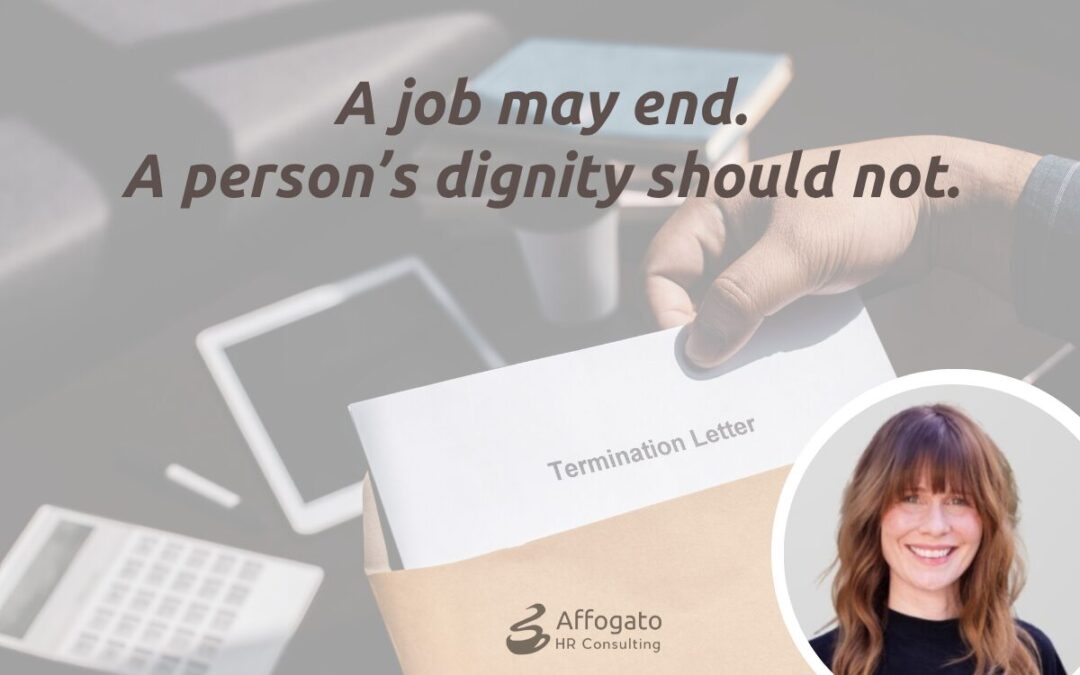
Over time, my perspective has changed. I have seen what HR looks like when it is done with intention, and I have become much clearer on one principle: terminations should be handled with respect and tailored to the situation. A job may end. The person’s dignity should not.
Risk has never come from a company caring too much about a departing employee. Risk comes when the process is careless. When the explanation is unclear. When the employee feels blindsided. When a longtime contributor is treated like a threat. When the team hears one version, and the employee hears another. That is when people start looking for inconsistencies and questioning whether they were treated fairly.
A better termination process recognizes that this is a moment of leadership. At its best, the process protects dignity, preserves goodwill, and gives the employee a path forward that does not create unnecessary panic. When appropriate, that may mean a transition period, a thoughtful exit package, or enough time for the employee to search for the next role before income stops.
Not all terminations should follow the same script. A long-term employee affected by restructuring should not have the same exit experience as a newly hired employee terminated for misconduct. Some situations require immediate separation. Others allow for a thoughtful transition. Terminations require judgment, discernment, and leadership.
Custom does not mean careless either. It does not mean emotional. It does not mean making it up as you go. It means the process matches the employee, the facts, and the business. The question should not be, “What is our standard termination process?” The better question is, “What does this employee, this situation, this manager, this team, and this business need?”
That is the work. Not making terminations soft. Not making them scripted. Making them thoughtful enough to fit the person, the circumstances, and the business.
Not sure what this employee, this situation needs? That’s exactly the work we do. Connect with our team.
Lisha, Jonna, Suzanne & Karen
P.S. The best terminations we’ve helped guide didn’t start in the conference room. They started with a phone call to us weeks earlier.
The above/attached information is not a legal advice. It should not be considered as a legal opinion as to which laws apply or as to how any law applies to a particular situation. Companies or individuals should seek advice of Counsel with regards to their situation.